Liberia and Ghana Deepen Cooperation to Combat Illegal Timber Trade as FDA and Customs Officials Complete Technical Exchange
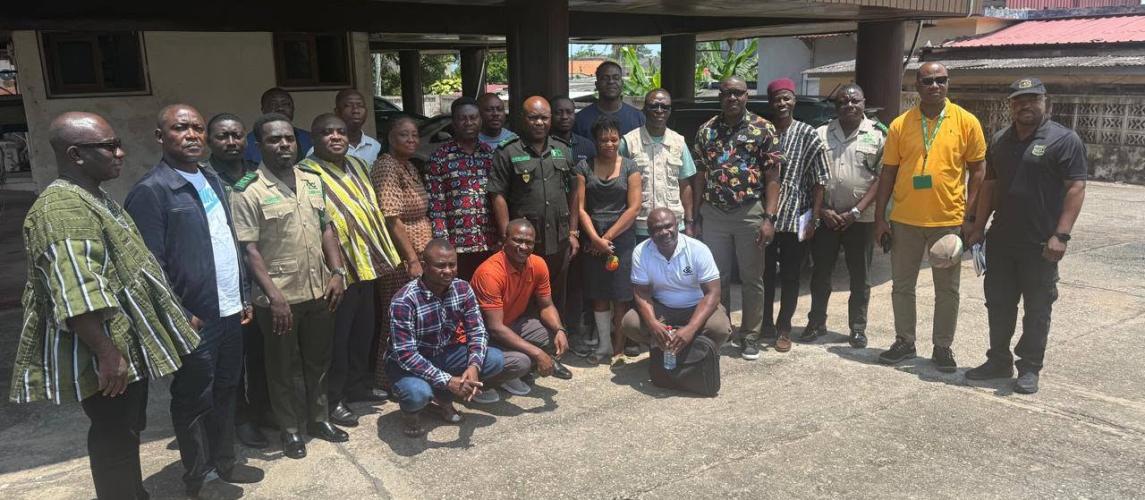
Monrovia, Liberia — In a significant step toward strengthening forest governance and closing loopholes in the cross-border timber trade, a high-level Liberian delegation has completed a five-day bilateral knowledge exchange with Ghana’s Forestry Commission.
Facilitated by the United States Forest Service (USFS), the initiative brought together personnel from the Forestry Development Authority (FDA) and the Liberia Revenue Authority (LRA) Customs Department for a technical exchange held from August 10–14, 2026.
The mission focused on Ghana’s timber legality, traceability, and supply chain monitoring systems. It also provided Liberia’s delegation with practical insights ahead of the national rollout of Wood Identification (Wood ID) technology and a decision tree reference guide.
Ghana’s electronic wood tracking mechanisms offered useful models for reducing documentation fraud, improving chain-of-custody compliance, and strengthening coordination among forestry regulators and customs officers at land borders and maritime ports.
The Liberian team included decision-makers and frontline enforcement officers from FDA’s Legality Verification, Law Enforcement, Compliance, and Chain of Custody departments, as well as regional foresters, senior border and port customs collectors from the LRA, and technical support from USFS.
During visits to Accra, Tema, and Takoradi, the delegation engaged specialized divisions of the Ghana Forestry Commission, including the Timber Validation Department, Legal Affairs Unit, and Timber Industry Development Division (TIDD). Field visits included Tema Port, where the team observed customs verification and digital tracking procedures for containerized exports; the Afenya checkpoint, where they studied real-time transit controls; and multiple log yards, processing facilities, and monitoring stations in Takoradi.
Key takeaways emphasized the importance of robust digital data tracking in identifying discrepancies in timber volume, species declarations, and harvest origin before export permits are finalized. Delegates also noted that effective forest law enforcement depends on seamless data sharing among forestry regulators, customs inspectors, and port authorities.
Integrated Wood ID systems were identified as a powerful tool for verifying protected timber species and helping curb illegal logging and timber trafficking. Participants expressed appreciation for Ghana’s hospitality and transparency, noting the mission’s practical value as Liberia modernizes its verification tools.
Welcoming the delegation back to Monrovia, FDA Deputy Managing Director for Operations and Technical Services Sundeh Albert Blanyon thanked USFS for its capacity-building support and urged the team to apply their new knowledge immediately to the deployment of Liberia’s Wood ID tool and the strengthening of border operations.
